The Simple Follow-Up Message That Changed Everything About How We See No-Shows
IN THIS SERIES
Part 1 — Why 45% of people who book our events don't show up
Part 2 — The follow-up message that changed everything (you're here)
Last week, we shared something that's been sitting with us for a while the fact that nearly half of the people who book our free events don't show up on the day. And that the reason is often far more interesting than a clash in the diary.
We said we'd share the simple follow-up message we send to every no-show. The one that completely changed the conversations we have and the way we think about running community events altogether.
Here it is:
The message
It's not a marketing email. It's not a rebooking nudge. It's not passive-aggressive. It's just a genuine, friendly check-in, and it takes about thirty seconds to read.
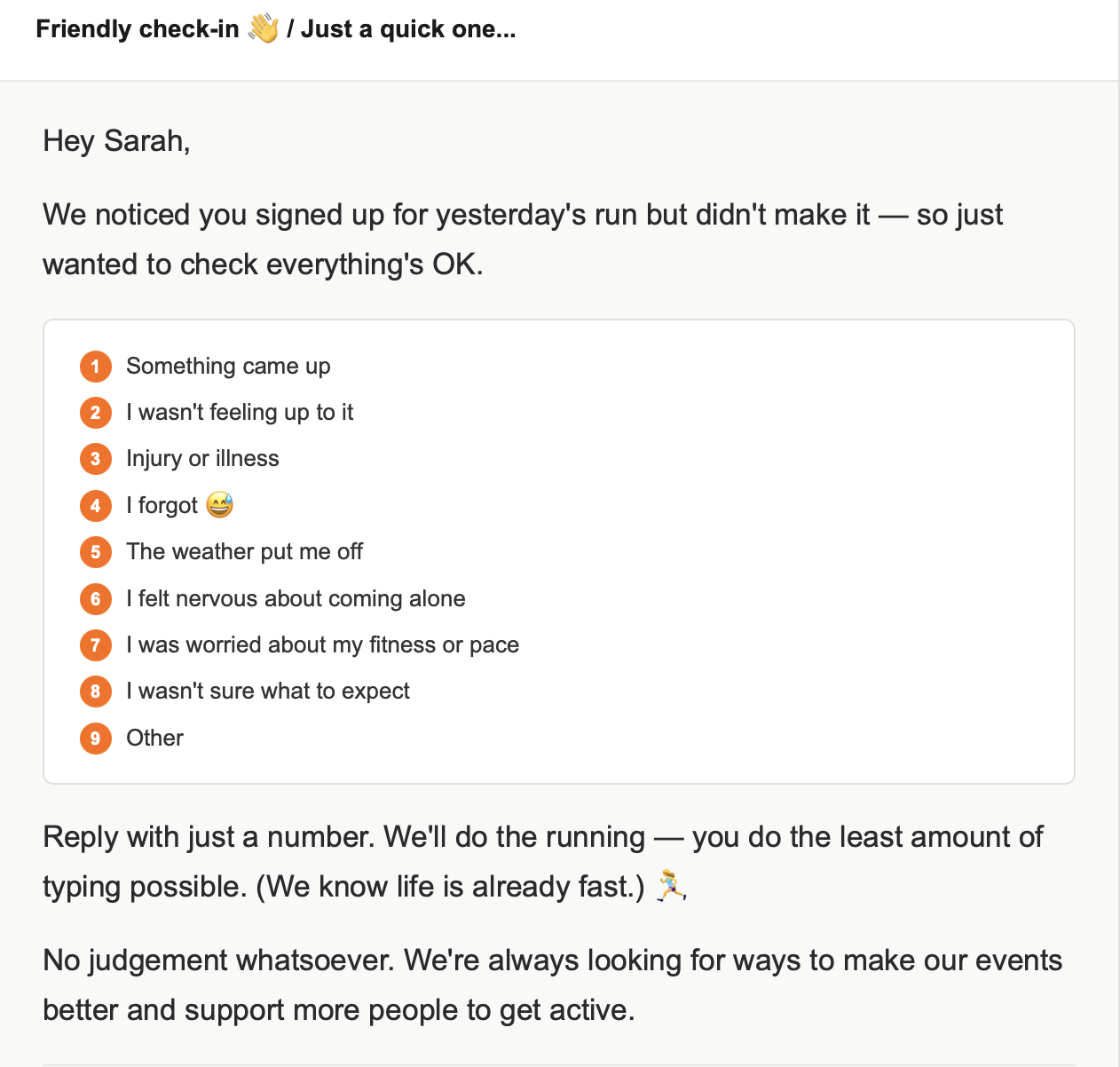
That's it. Nine options, a one-number reply, and a promise of
zero judgement.
Simple. Kind. And as it turns out, genuinely illuminating.
What people actually reply with
Here's where it gets interesting. Because people almost never reply with just a number.
They reply with a number, and then a sentence. Sometimes a paragraph. Sometimes a confession they've never told anyone.
And what we've noticed, time and again, is that the first answer and the second answer tell two very different stories.
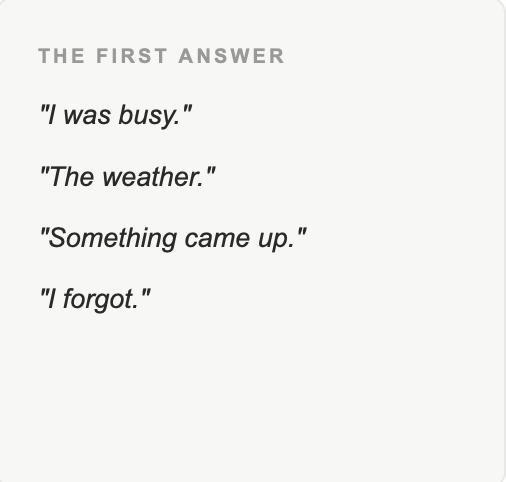
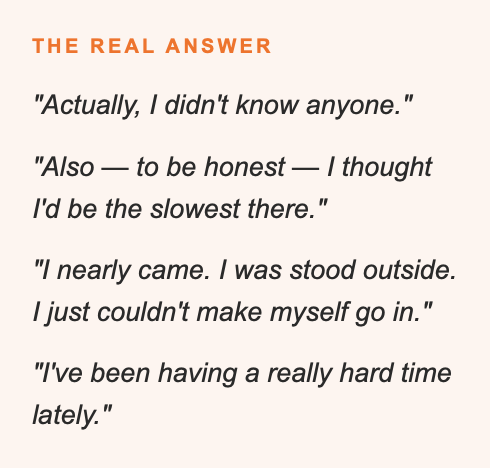
“The surface-level answer helps attendance figures. The second answer helps people AND attendance. For community event managers, that’s where the treasure is often buried.”
Why this matters for wellbeing and community teams
If you organise fitness events, whether that's a workplace running club, a residential community session, or a public group, you'll know the sinking feeling of looking out at a half-empty start line after weeks of promotion.
The easy read is disengagement. The harder, truer read is often something else entirely.
Some people didn't come because something genuinely came up.
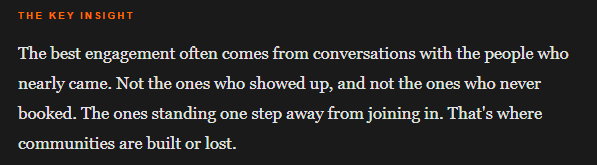
But some people got dressed and then talked themselves out of it. Some people wanted, desperately, to walk through that door, and a quiet voice in their head said: you don't belong here.
You'll never know which is which from the attendance data alone.
But a friendly message, sent with no agenda other than to check in, can open a door that the event itself couldn't.
Why personalisation is everything
One thing we feel strongly about: this message only works if it’s personal.
A genuine message from a real person, to a real person, that begins with their actual name.
There's a meaningful difference between receiving "Hi there" and
"Hey Sarah."
The first feels like admin.
The second feels like someone noticed you weren't there and cared enough to ask why.
In an era of automated everything, that small act of noticing is surprisingly powerful. It tells the person: you're not just a booking reference to us. You're someone we were looking forward to running with.
What we do with the replies
Every reply we get goes into two buckets. The first is practical, it tells us where our events can improve.
Are people unsure what to expect?
Is our communication clear enough beforehand?
Is there something about the location or the start time that means people can’t attend?
The second bucket is more important. It's the human one.
When someone tells us they nearly came but felt too nervous, we don't file that away and move on. We reply. We reassure them. We tell them — genuinely, that there is no pace too slow for us, that no one has ever been left behind on one of our tours, and that next time, we'd love to see them.
And often, they come. Because someone asked.
3 things to take away
Send a follow-up to every no-show, not to guilt-trip them, but to open a conversation. Make it short, easy to respond to, and completely free of pressure.
Listen for the second answer. People will often give you a polite surface-level reason first. The real reason, the one you can actually do something about, usually follows. Give it space.
Treat no-shows as people, not data. Every person who didn't come was interested enough to book. That's not a failure, it's a relationship that just hasn't started yet.
We know many community and wellbeing teams already communicate brilliantly with the people they serve. We're not claiming to have reinvented the wheel, just sharing what's worked for us in six years of running events across Birmingham. If it's useful, brilliant. If you've got your own version of this, we'd love to hear it.
And if you're one of the people who's booked a Run of a Kind event and not made it yet, genuinely, no hard feelings. We'd love to have you.
There's a run with your name on it whenever you're ready. 🧡