Don't Be Afraid to Be "Annoying": The Multi-Pronged Approach to Event Attendance
Double-click to edit...
Here's a mistake we see all the time and one we made ourselves in the early days of Run of a Kind.
An event gets planned. A lot of effort goes into the logistics, the route, and the format.
Then the announcement goes out.
One email. A social post. Maybe a flyer.
And then everyone holds their breath and hopes people show up.
Sometimes they do.
Often, they don't - at least not in the numbers you hoped for.
And it's tempting to conclude that people just aren't interested.
That the event didn't land.
That you need a different topic, a different time, a different format.
But more often than not, the event is fine. The problem is the communication strategy, or rather, the lack of one.
The single-announcement trap
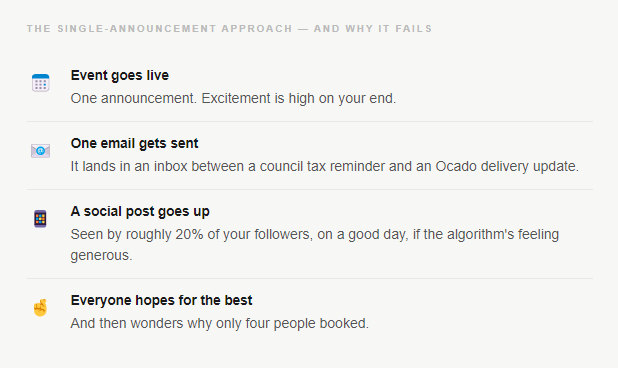
Let's be honest about something that's easy to forget when you're the one doing the promoting.
You see every single thing you put out.
Every email, every post, every message.
To you, it feels like a lot. But your audience?
They might catch one in five of your social posts on a good day.
Emails get buried under fifty others in the same inbox.
Good intentions get forgotten between a busy Tuesday morning and an even busier Wednesday afternoon.
Make it stand out
This isn't a reflection of your community's enthusiasm. It's a reflection of how attention works in 2026.
People aren't ignoring you; they're just busy, distracted, and swimming in information.
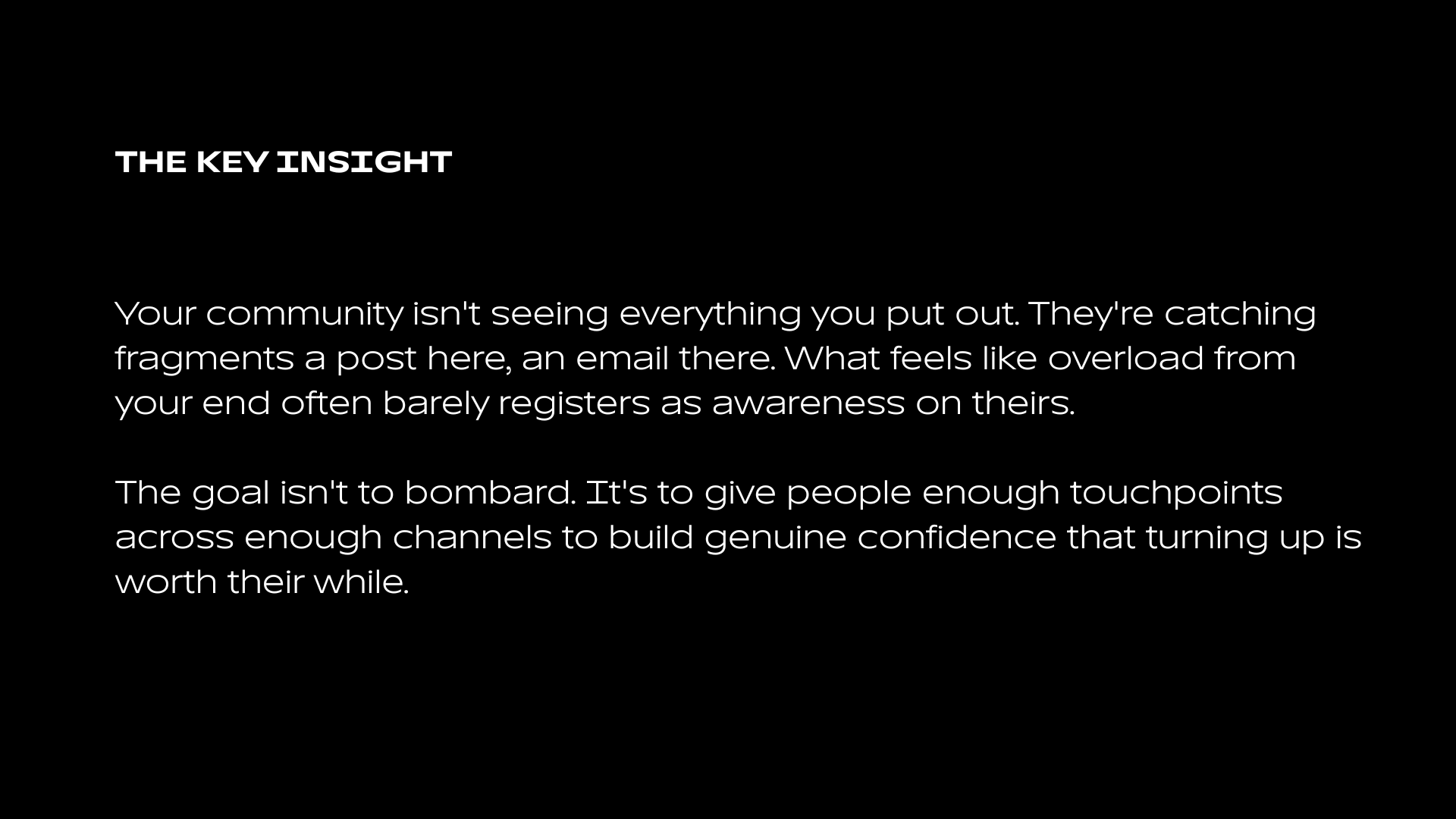
The events that consistently fill up aren't the ones with the cleverest single announcement. They're the ones where people encounter the event multiple times, in multiple ways, before it even takes place.
What each touchpoint actually does
Over six years of running events across Birmingham for workplaces, residential communities, and public runners, we've found that strong attendance almost always comes from a combination of channels working together. But here's the thing: they're not all doing the same job.
Each touchpoint achieves something slightly different. Understanding what each one does is what lets you use them intentionally, rather than just spraying the same exact message everywhere and hoping something sticks.
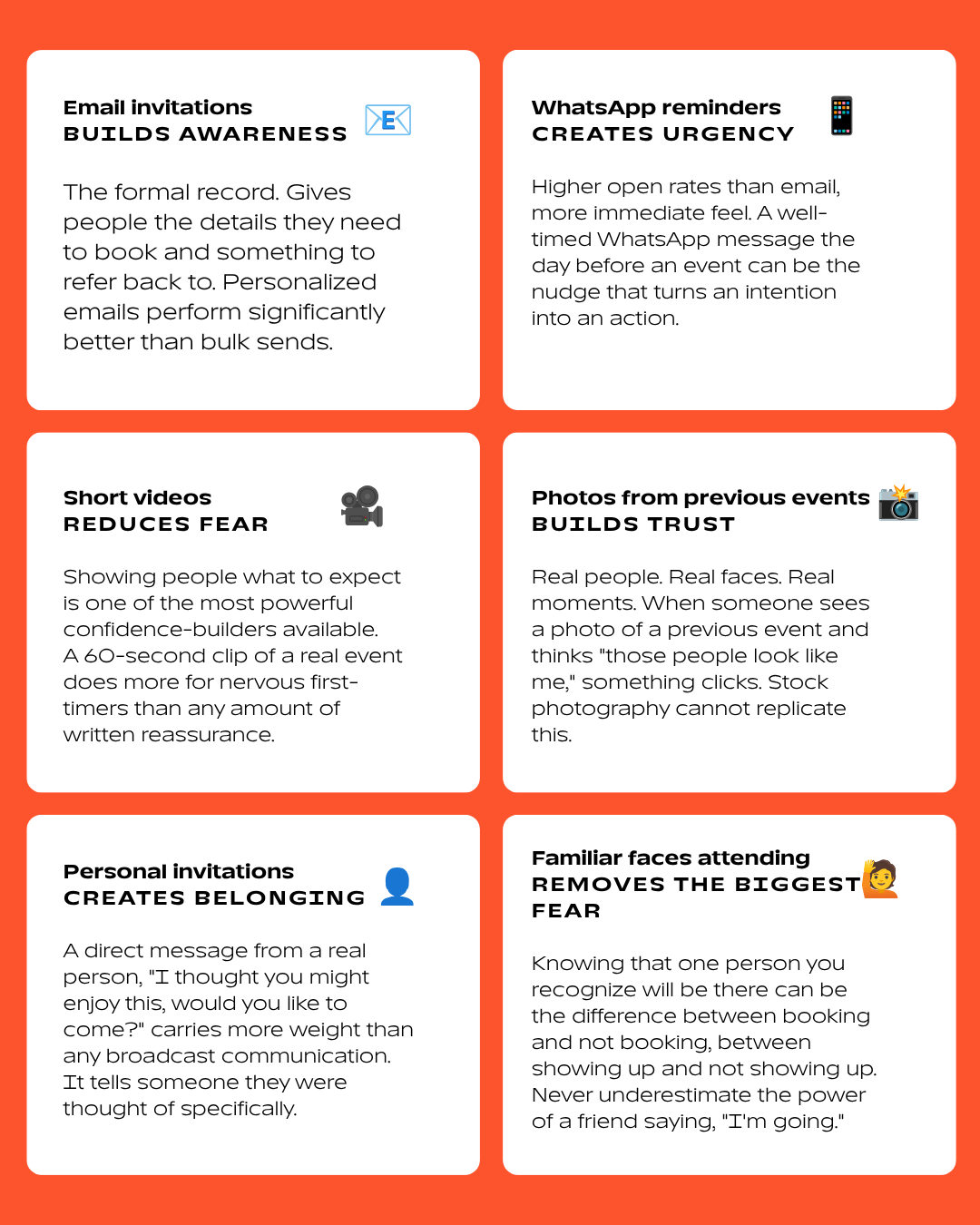
Each of these builds on the last. Awareness leads to interest. Interest needs reassurance. Reassurance creates excitement. Excitement, combined with trust, leads to action.
It's not about reminders — it's about confidence
This is the reframe that changed everything for us.
When we used to think about sending multiple messages before an event, we framed it as reminding people. Nudging them. Making sure they didn't forget.
But that framing misses the point entirely, and it's also why so many people worry about coming across as annoying.
The truth is, you're not reminding people that an event exists. You're gradually building their confidence that they'll enjoy it. That it's worth their time. That they'll fit in. That they won't regret going.
“Nobody needs six reminders. They need six reasons to believe they’ll enjoy it. Attendance is often the result of accumulated confidence, and confidence grows through familiarity.”
Seen through that lens, each piece of communication isn't a repetitive nudge. It's a new piece of evidence that arriving at your event is a good idea.
The confidence ladder
Think of the journey from "I've heard about this" to "I'm actually going" as a ladder. Each touchpoint moves someone up a rung. Miss too many rungs and people stall, not because they don't want to come, but because they haven't accumulated enough confidence to take the step.
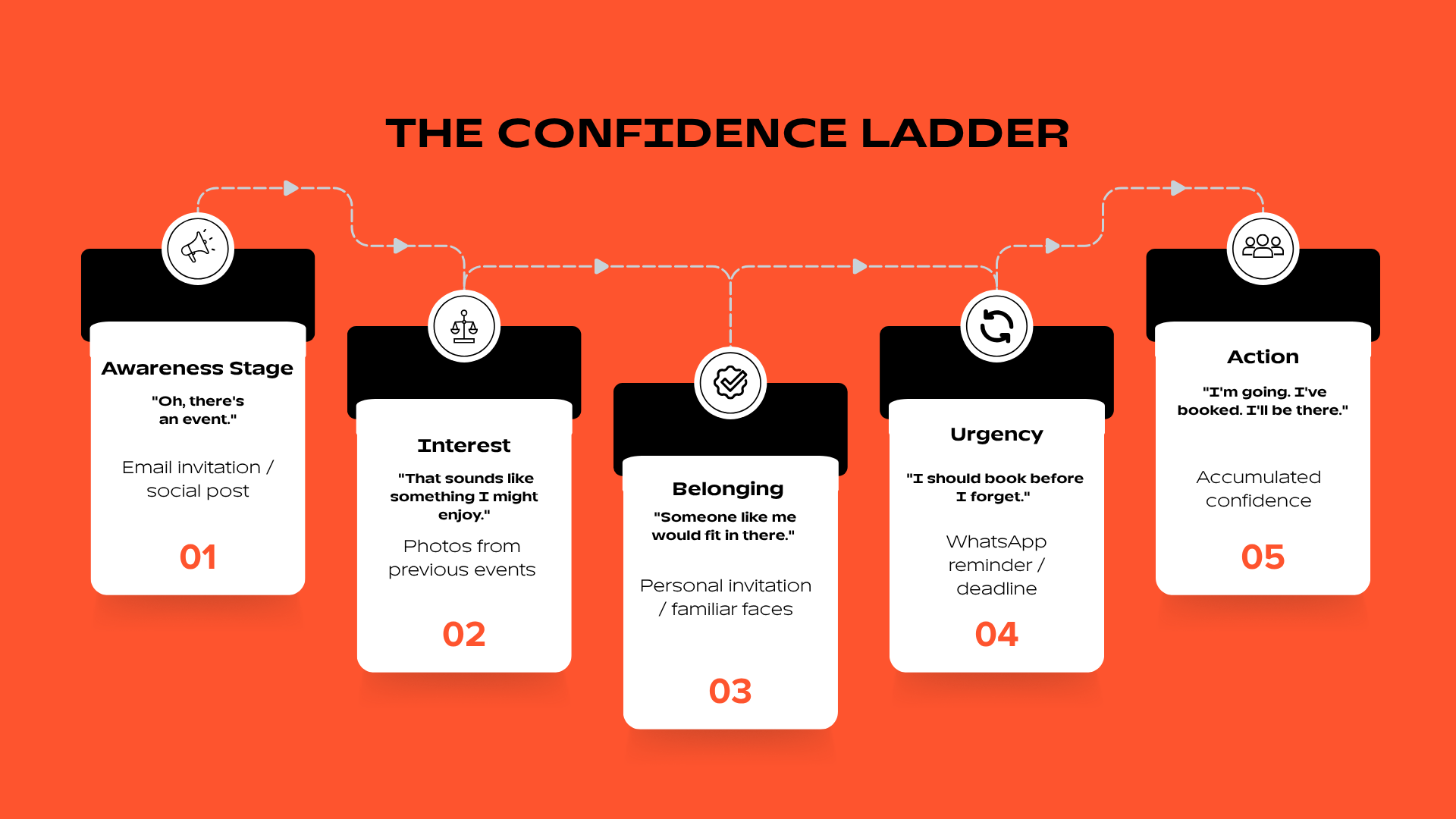
A single announcement can get someone to rung one. Maybe rung two. But rung six, the one that ends with them actually showing up, almost always requires the full climb.
But won't people find it annoying?
This is the question we get asked most often when we talk about this approach. And it's a fair one.
The short answer is: not if you're saying something different each time.
Annoying communication is repetitive communication. Sending the same "Don't forget to book!" message five times is annoying. But sending an email with the event details, followed by a video showing what the route looks like, followed by a photo from last month's event, followed by a personal message from a team member, that's not repetitive. Each piece offers something new. Each one does a different job on the confidence ladder.
A practical starting point
If you manage wellbeing events, community fitness sessions, or any kind of group activity where attendance matters, here's a simple multi-pronged framework to start with:
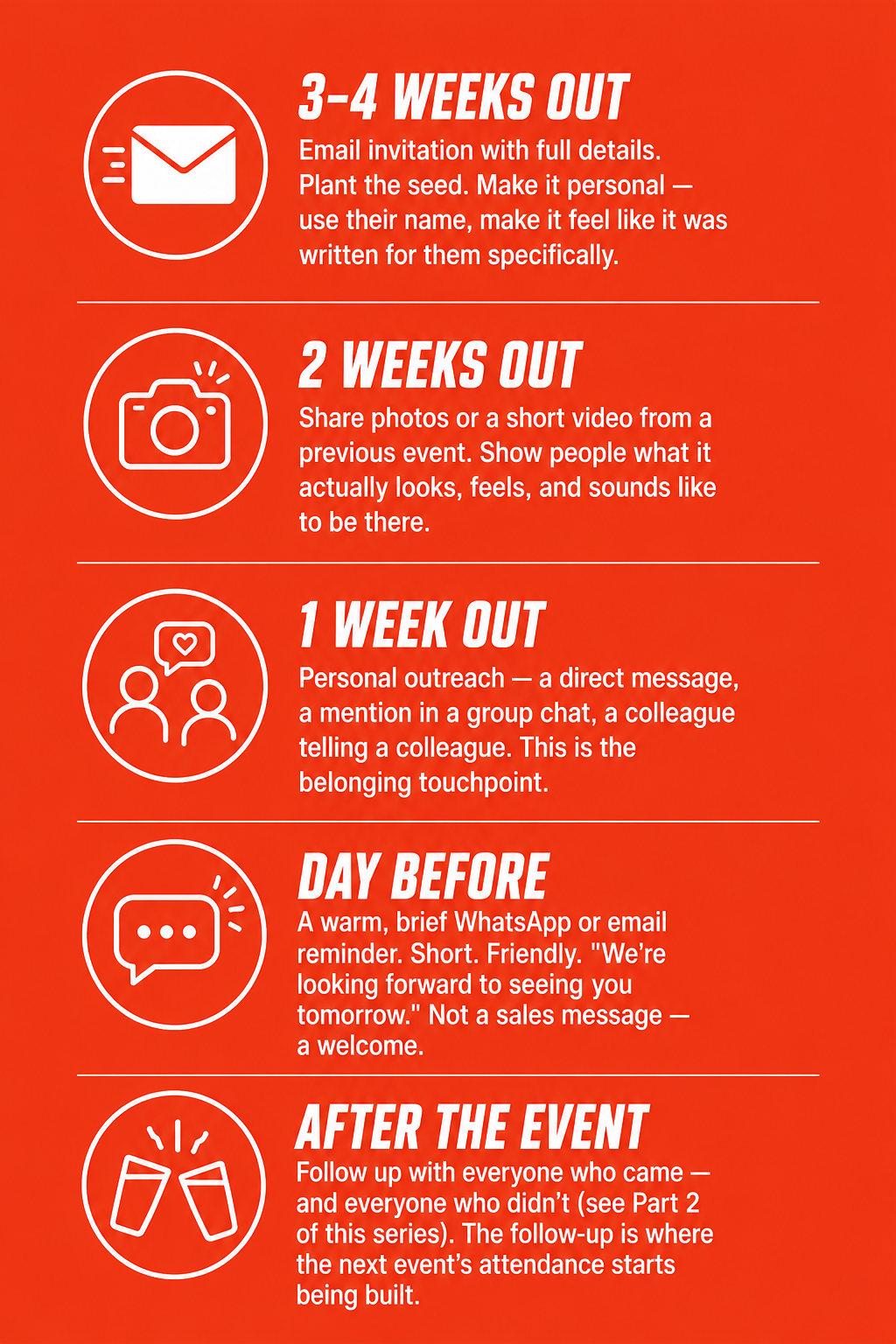
The best-attended events we've ever run weren't the result of one brilliant piece of communication. They were the result of the right people feeling confident enough through multiple small moments of reassurance to walk through the door.
Don't be afraid to be "annoying." You almost certainly aren't. And your community will thank you for it. 🧡